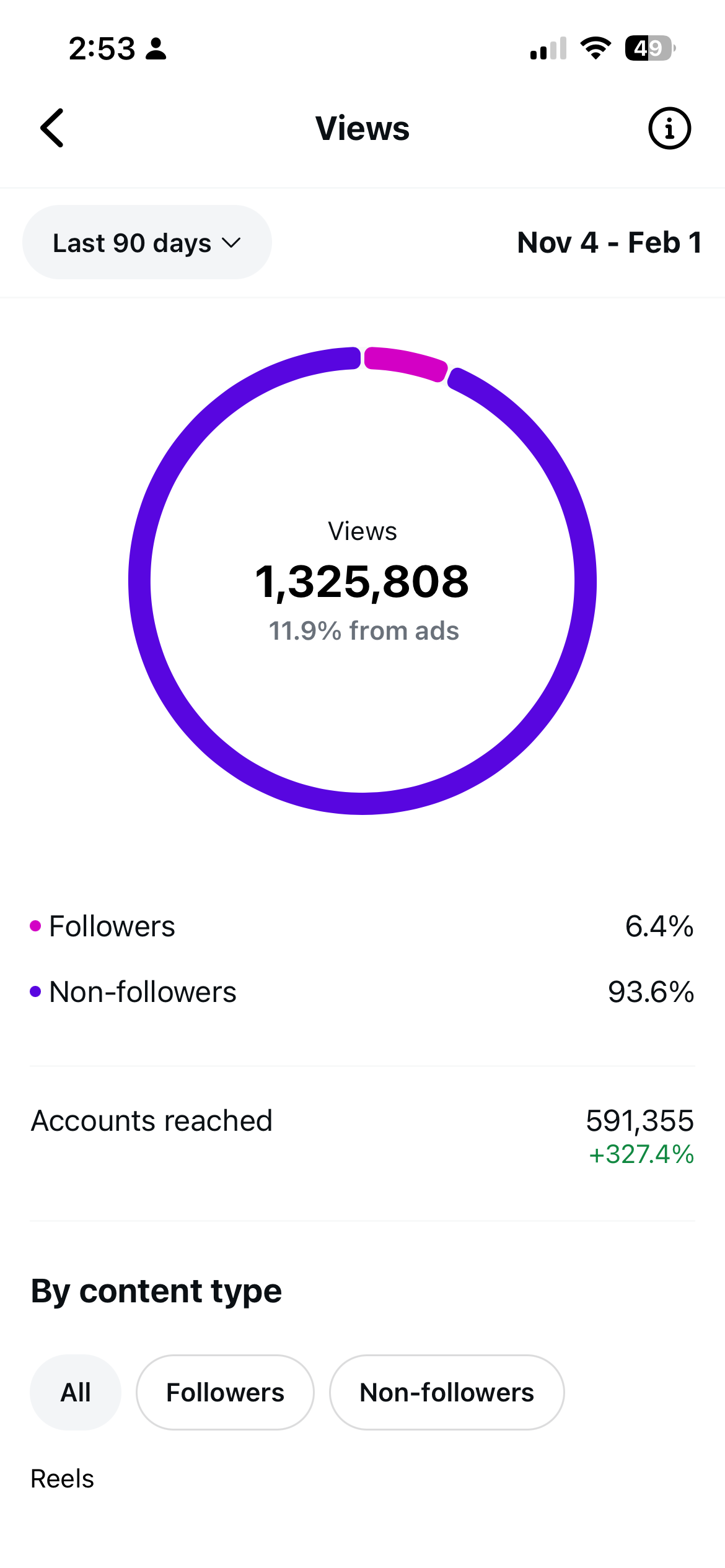
In the last 90 days, my content generated over 1.4 million views across Instagram, TikTok, and YouTube.
93.6% of those views came from people who didn’t follow me. Accounts reached grew 327%. And none of it came from a polished ad campaign. It came from short-form content made by one artist with a camera and a strategy.
I’m sharing the numbers up front because digital marketing for music brands has never been more competitive, and most of it is still built on a model that stopped working. This post breaks down what’s broken, what I did instead, and how music brands can apply the same system.
Digital marketing for music brands is broken… and producers can feel it
Plugins, headphones, audio tools, and music education platforms are releasing incredible products. Yet many still struggle to convert attention into customers.
The issue usually isn’t quality.
It’s messaging.
Most music brands talk about features: specs, updates, compatibility, technical improvements.
But music producers don’t buy features.
They buy outcomes.
They buy workflow improvements. Creative confidence. Emotional relief. A feeling that a product understands them.
When digital marketing doesn’t speak to those pain points, attention doesn’t convert, no matter how good the product is.
Why short-form content matters for music brands in 2026
Short-form content is now the primary discovery channel for music brands.
Instagram Reels, TikTok, and YouTube Shorts are where producers:
- discover new plugins and tools
- form opinions about brands
- decide who feels authentic and who doesn’t
The industry data backs this up. Creator content now makes up 44% of brands’ paid media creative, and 77% of marketers say creator content outperforms traditional branded ads. Nearly two-thirds of new creator spend is being pulled out of traditional paid channels to fund it.
But posting short-form content alone isn’t enough.
Without strategy, most content:
- gets views but no retention
- earns attention but no trust
- generates traffic but no sales
Short-form content only works when it’s designed as part of a digital marketing system, not a posting schedule.
What 1.4 million views in 90 days actually took
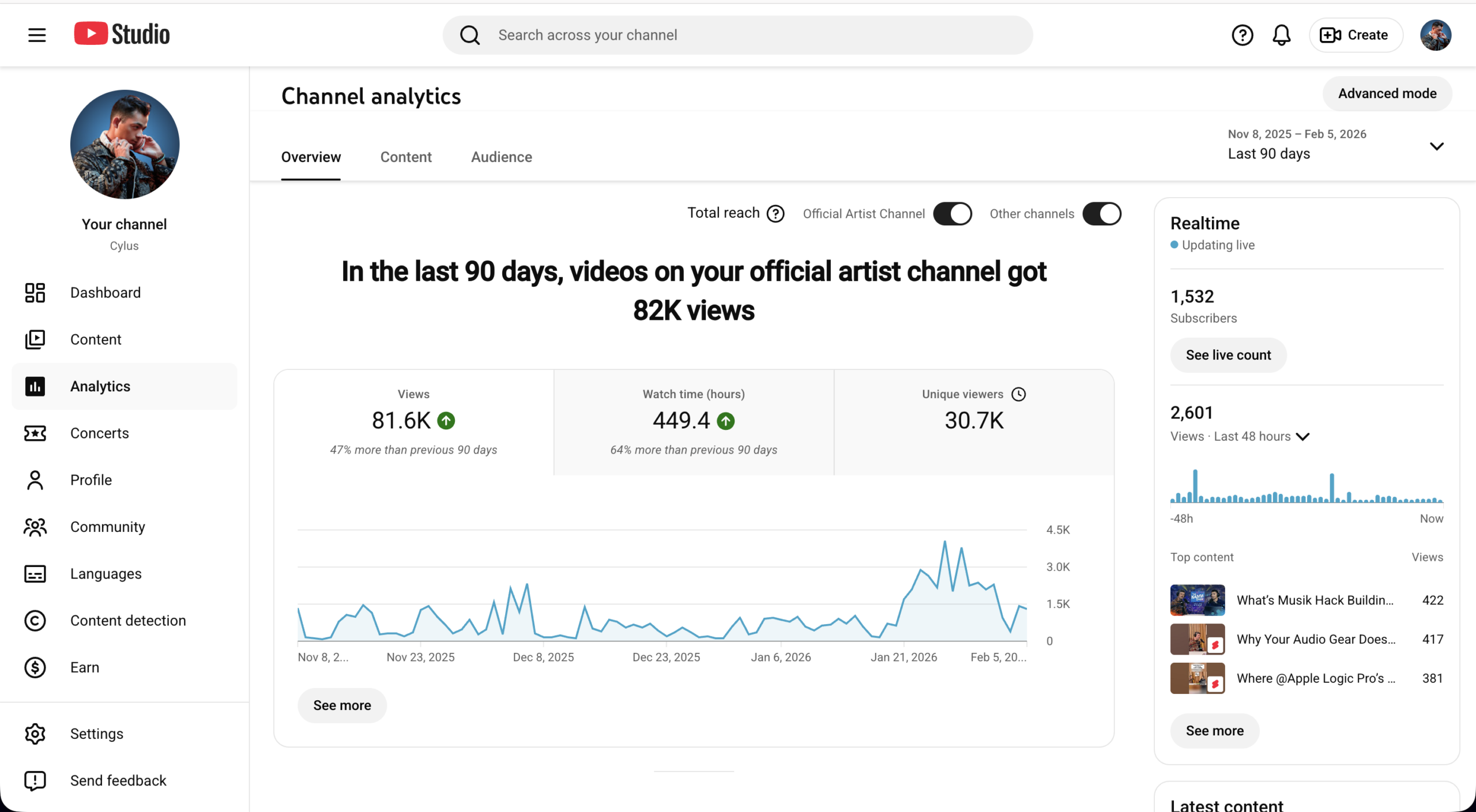
Here’s the part most marketing posts skip: the receipts. From November to February, my channels did 1,325,808 views on Instagram, 81,600 on YouTube (up 47% over the previous period), and 10,664 on TikTok.
Three things drove it.
1. Trial Reels
Instagram’s Trial Reels feature tests your content on non-followers before your own audience ever sees it. Most brands ignore it. I built my whole distribution strategy around it, and it’s exactly why 93.6% of my views came from people who had never heard of me. That’s not vanity reach. That’s a discovery engine.
2. On-screen text written for one specific person
Every video opens with a hook, on-screen text aimed at a precisely defined ideal customer. Not “music producers” in general. A specific person with a specific struggle. Hook first, storytelling second, quality throughout. When the text on screen names the exact problem someone is having, they stop scrolling.
3. Knowing the audience better than they know themselves
That precision didn’t come from guessing. It came from over 70 calls with my ideal clients, asking what their struggles, pain points, and desires actually are. It takes grit to do that many conversations, but once you know what your audience wants word for word, you can work backwards into content, and even into product.
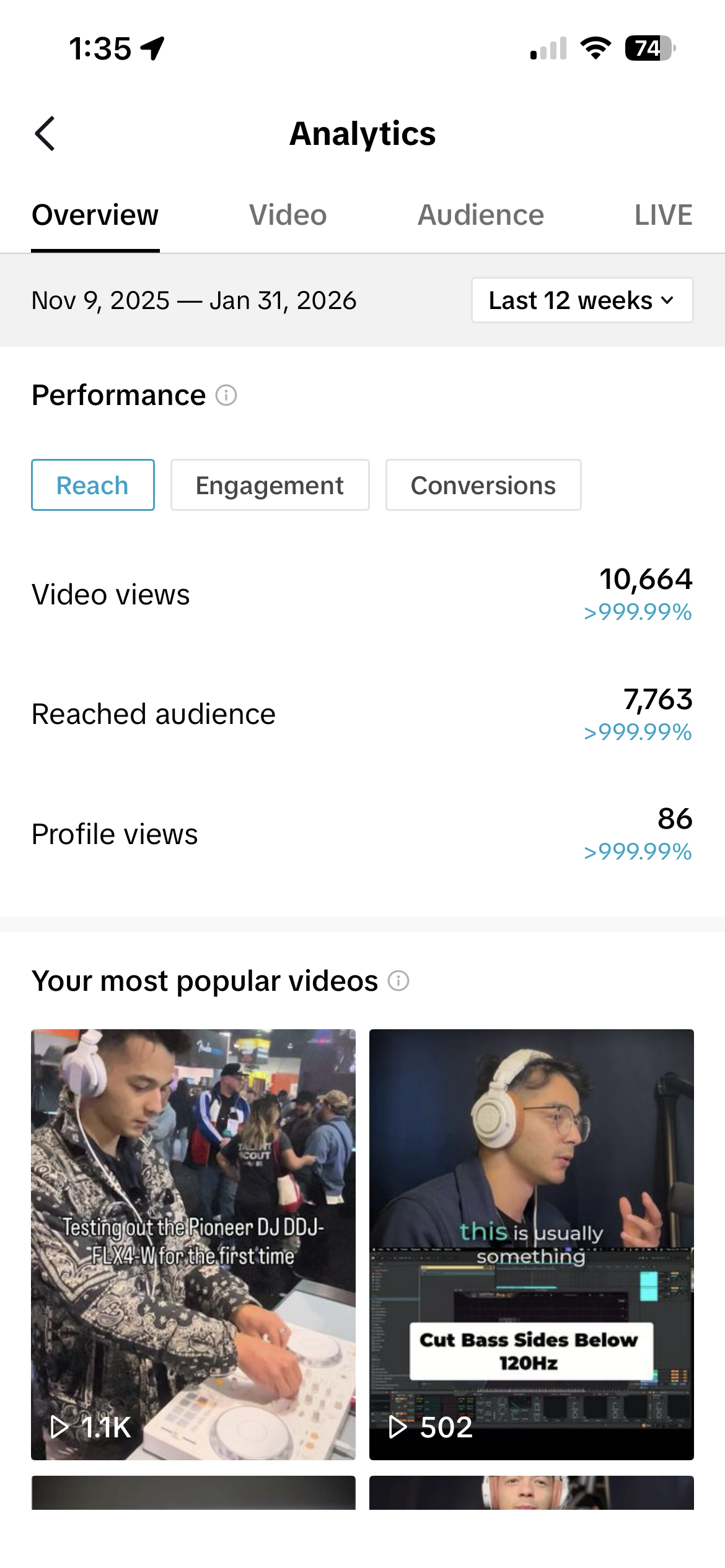
You can see the actual videos behind these numbers in my Instagram portfolio.
The overproduced commercial problem
Here’s an opinion that won’t be popular with agencies: TV-style commercials are killing music brand marketing on short-form.
Overproduced, over-analyzed brand spots are great for a different channel. Professional media quality belongs on TV. On Reels and TikTok, that same content reads as an ad, and producers scroll straight past it.
A real example: a do-it-yourself creator video I made showcasing FabFilter’s Pro-Q 4 pulled over 15,000 organic views on my Instagram page. No studio. No agency. No media budget. Just a working producer showing a tool he actually uses to the exact people who need it.
That result isn’t an accident. 80% of consumers trust creator-made content more than traditional advertising, because people trust people, not brand accounts.
If your content is getting views but sales aren’t moving, the problem usually isn’t the algorithm. I broke down why music brand content fails to convert in a separate post.
The advantage of artist-led digital marketing for music brands
One of the biggest shifts in digital marketing for music brands is who builds the strategy.
Artist-led strategy performs differently.
Active artists:
- understand producer psychology intuitively
- know what feels authentic vs salesy
- test content systems in real time
- build trust through lived experience, not theory
This is why brands increasingly reach out to creators instead of pushing everything through their own channels. A creator’s feed feels organic. A brand account feels like marketing. The brands that understand this are borrowing trust that took creators years to build.
I’ve experienced this shift firsthand. After those 90 days, brands started reaching out to me. That’s the compounding effect of getting one marketing channel truly right: attention becomes brand recognition, and recognition becomes inbound opportunity.
Real organic growth comes from systems, not hacks
Sustainable digital marketing for music brands is built on systems:
- short-form content systems
- messaging clarity
- platform-native distribution
- conversion-focused digital experiences
When these systems work together, brands see consistent organic reach, higher-quality engagement, clearer positioning, and better conversion from views into paying customers.
The same principle applies to artists. Getting attention is a learnable skill, and I wrote about the one thing pros have that most producers don’t if you want to go deeper.
This is how brands move from chasing attention to owning it.
Ready to improve your digital presence?
If you’re a music brand, tool, label, or education platform looking to:
- improve your digital presence
- turn short-form content into real growth
- convert attention into long-term customers
One last principle: attention needs a destination. For a plugin company, that’s a product page built to convert views into sales. For an artist, it might be a merch store, Bandcamp, or Apple Music. The channel matters less than the clarity of where you send people next.
You don’t need louder marketing.
You need clearer signal.
Explore Cylus Music Brands: cylusmusic.com/brand
See the work: instagram.com/cylusmusic/portfolio
Pingback: Why Your Music Brand's Content Isn't Converting (And What the Best Brands Do Instead) - Cylus Music Blog
Pingback: The Dad Cap, Reimagined - Cylus Music Blog
Pingback: How I Used Claude Design to Create Motion Graphics for My Music Brand (And What Actually Happened) - Cylus Music Blog
Pingback: What Are the Benefits of Running Meta Ads to Promote Your Music? A $1,116 Case Study